
















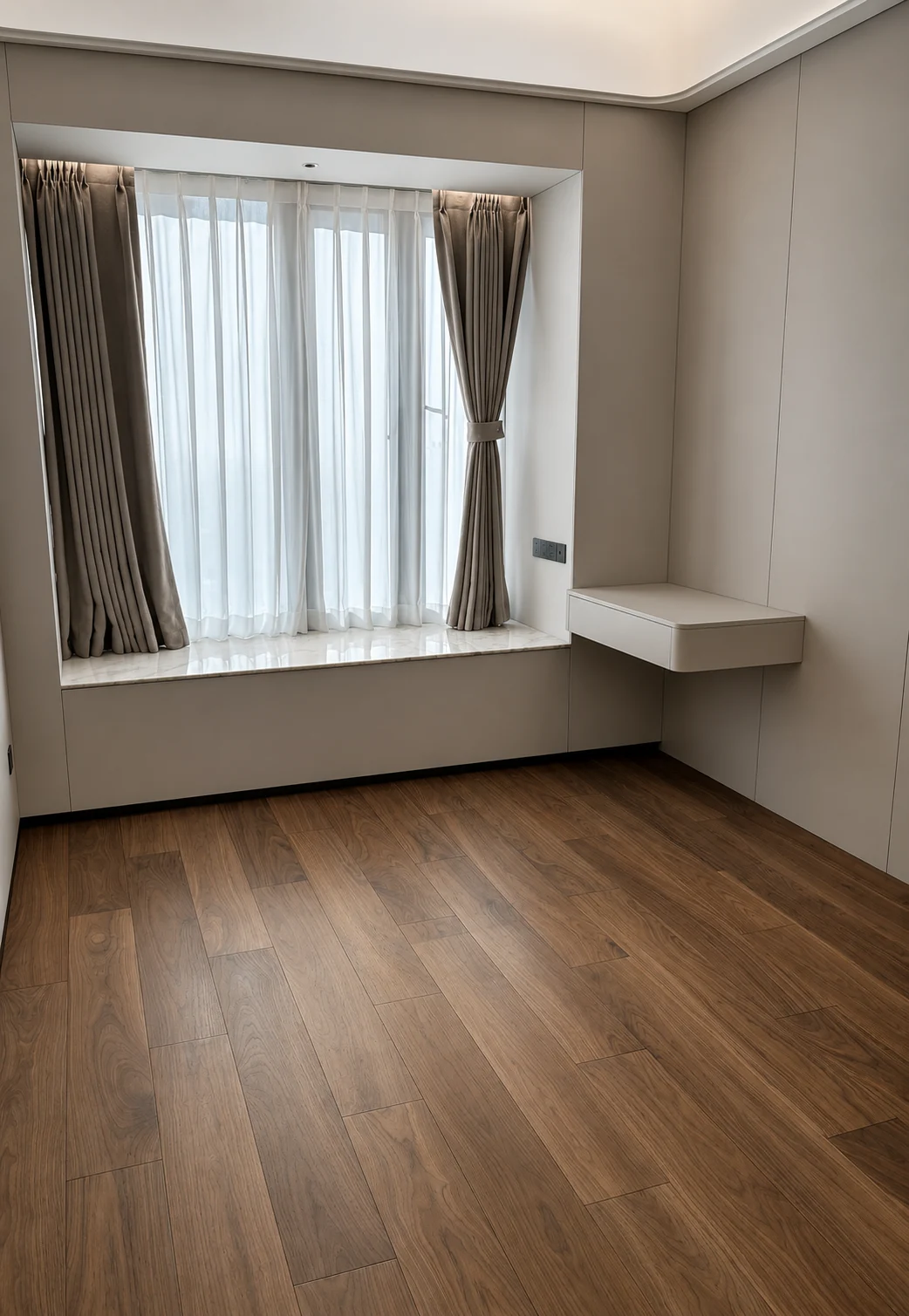
For all-birch plywood core flooring in residential or commercial projects, compare core, top-layer wood and format separately. Using original products, HUAGE explains how to read total thickness, top-layer thickness and finishes during sampling, then record the selection in project specifications.
Understand three names for the same board
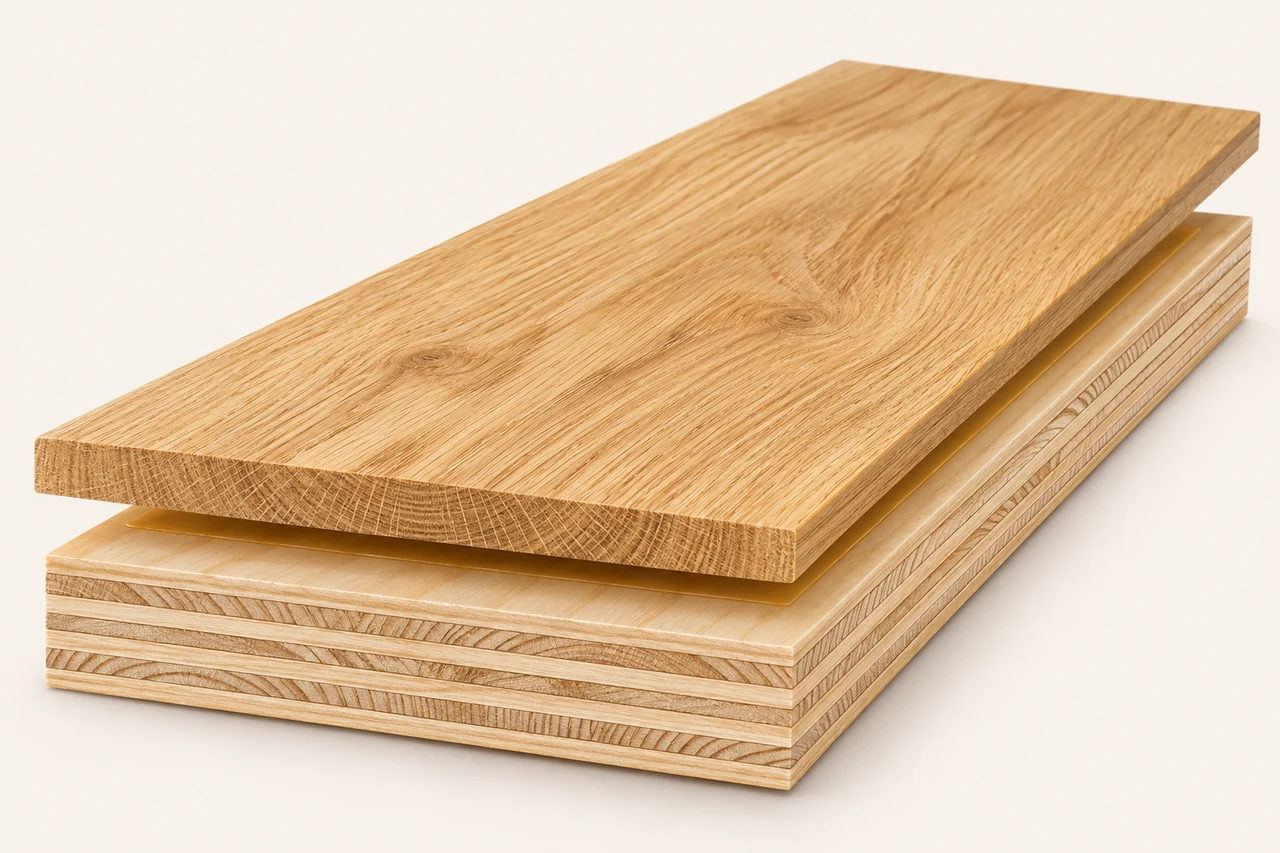
HUAGE multi-ply engineered flooring combines a timber face with a layered core. All-birch plywood uses cross-laid layers; faces may use European white oak, black walnut or other timbers. One board can therefore have an all-birch plywood core and an oak face. These describe different parts, so asking only whether it is all-birch does not identify the surface eventually seen and touched.
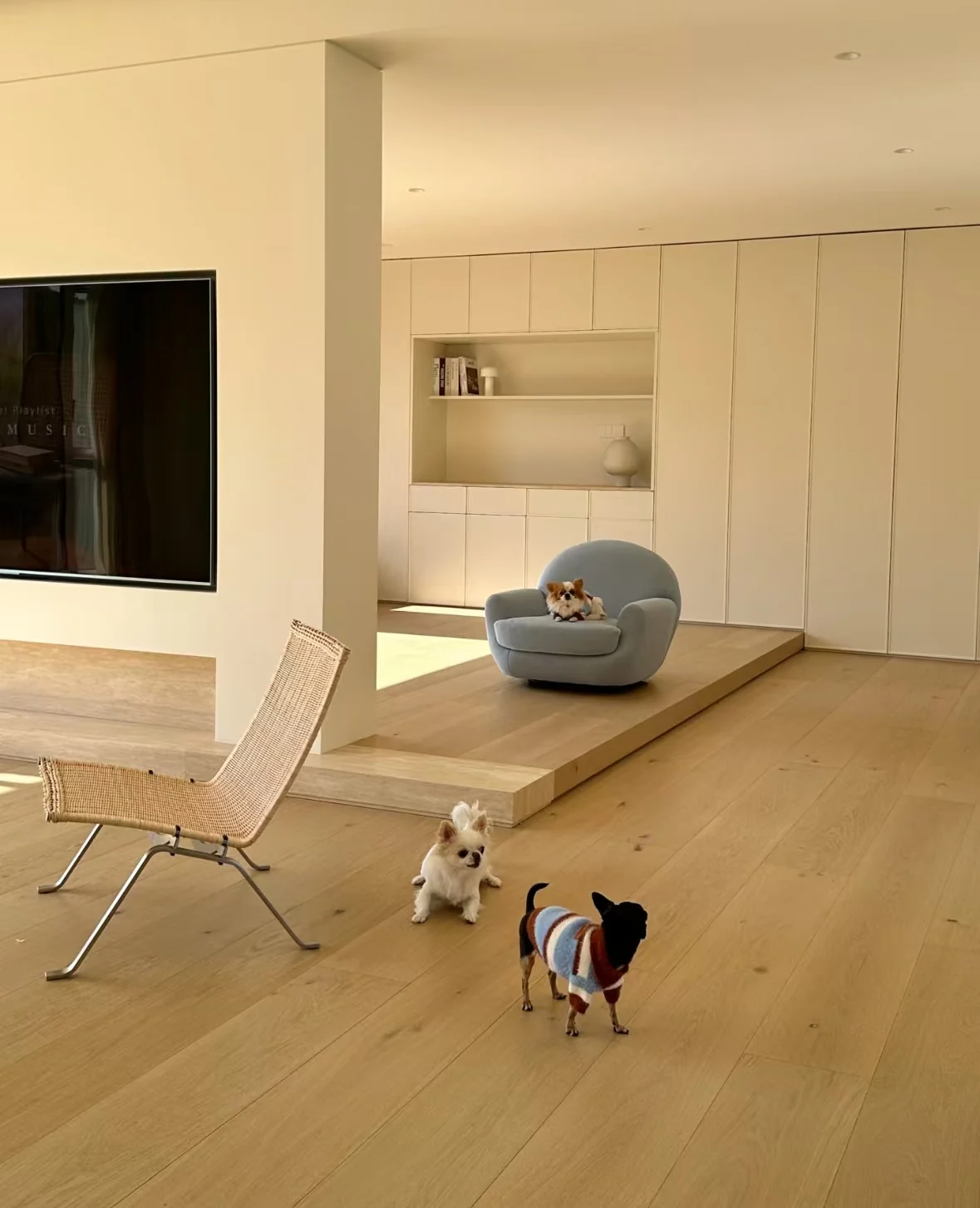
Record core, face species and format separately. Wide straight planks are a format, multi-ply engineered wood a construction, herringbone/chevron patterns. They may combine, but one construction does not automatically offer every format and pattern. Establish the application first, then check construction, species, format and joints individually.
Read specifications through the Champs-Élysées example
The original Champs-Élysées record lists a European white oak top layer, Russian all-birch plywood core, board length 1900 mm, width 190 mm, total thickness 16 mm and solid wood top-layer thickness 4 mm, with a hand-scraped or blunt-tool finish. Top-layer and overall thickness are separate fields: 4 mm is not the whole board thickness, and 16 mm does not establish the top-layer thickness of all similar products.
These original parameters establish a comparison basis. For actual purchasing, match the selected colour, current dimensions, top layer, core, tongue-and-groove or click-lock profile and finish within one approved specification. Another all-birch plywood core board may differ in width, top layer or finish; compare those differences rather than assuming identical products from the construction name.
Relate construction information to site conditions
Catalogue construction information is a starting point. Projects must also consider the subfloor, finished level and service environment. Coordinate overall flooring thickness with adhesive, underlay or other build-up, and recheck door clearance, thresholds and neighbouring materials. The catalogue lists floating and full-spread glue-down methods, among others; confirm the appropriate method against the board joints and compatible system.
For heating, discuss boards and the actual system together: build-up, operation and adhesive/underlay compatibility. Multi-ply descriptions do not replace specific suitability instructions. Environmental, moisture or abrasion requirements need relevant models/batches; construction names and images cannot replace those checks.
Match physical samples with orders
Examine both the face and cross-section of physical samples. The face supports comparisons of tone, knots, grain and feel, while the cross-section identifies the top layer and core. Viewing several samples together under project lighting makes installed variation easier to understand. Label samples with the design, colour code or mutually agreed identifiers rather than relying later on phone photographs alone.
Order documents fix the selections: corresponding product names, length, width, total thickness, top-layer thickness, construction, finish, quantities and supply arrangements. Recheck these fields for alternatives rather than confirming colour similarity alone. HUAGE uses original catalogue information to begin discussions and connects construction details to specific samples and project schedules, giving selection and installation a consistent basis.
China projects can check approved samples against finished levels and installation proposals, using one specification set for quotations and orders. Reconfirm top layers, construction and finishes when substituting designs.