

















Wide or narrow boards: assess the joints within the room
Board width changes more than the size of an individual board: it also changes the rhythm of joints and grain across the floor. Compare samples, room proportions and laying direction together before choosing.
● HUAGE material notes · Material notes
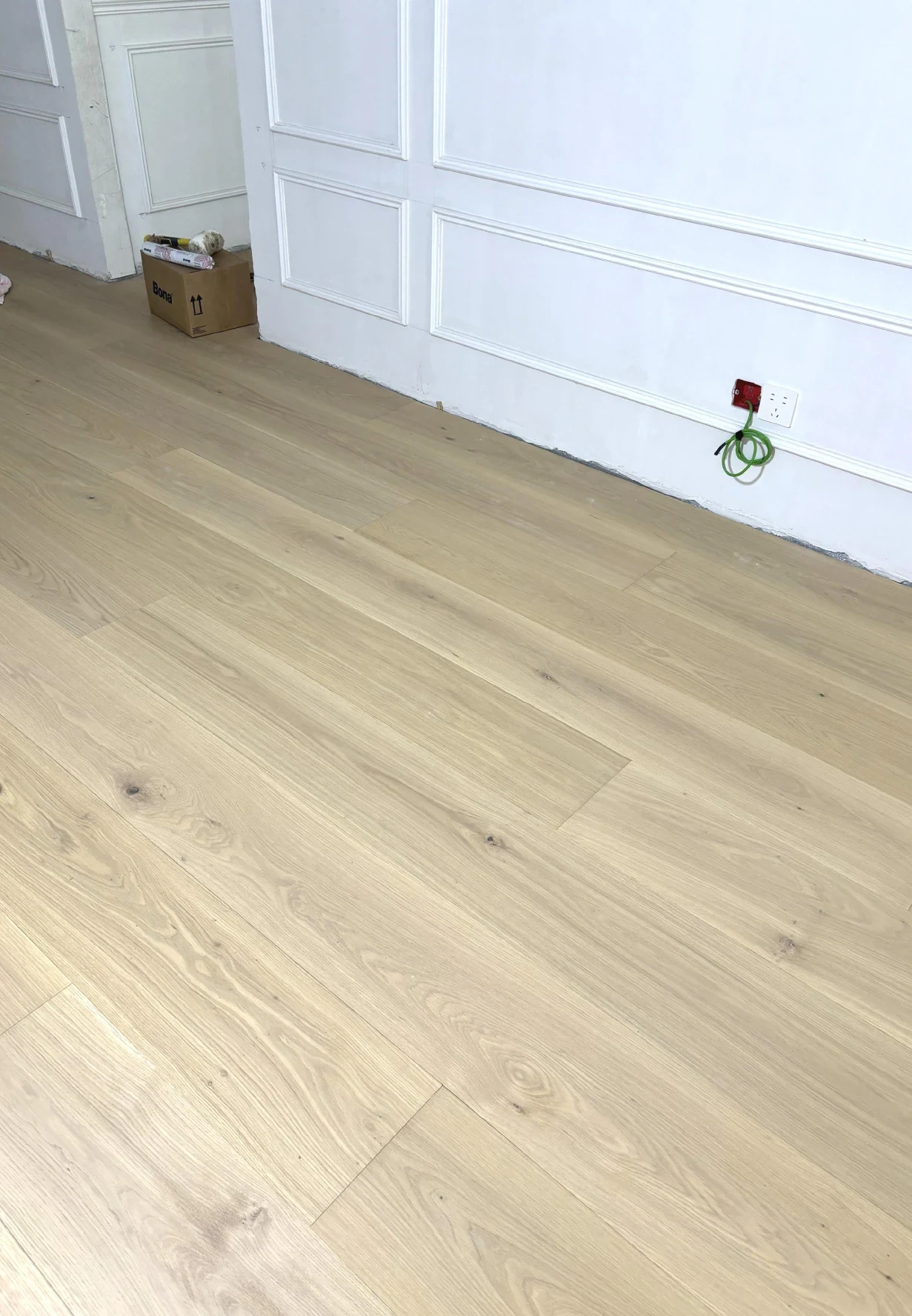
02Board width changes the rhythm of a floor
Large straight boards reveal more continuous grain, while narrow boards organise floors through more repeated lines. Each format has its own expression; suitability depends on room width, furniture and adjoining spaces.
03Look at the whole room before an individual board
One sample can attract attention, but a room's effect also comes from repeated boards. For wide planks, observe grain over a more complete board face; for narrow boards, consider joints, tonal changes and laying rhythm together. Review samples with the plan, marking doorways, circulation and major furniture. Board direction, staggered ends and relationships with walls and furniture are more meaningful than selecting one width in isolation.
04Complete the product information after selecting the appearance
Width describes board format, not material construction. Once a preferred colour is selected, check length, overall thickness, top layer, surface appearance and edge treatments to match the sample with the actual product required. Start wide/narrow-board selection from available colour references, then discuss room proportions and patterns. Including area, plans and adjoining-finish references moves the discussion from which board you like to how it will work in the room.
HUAGE · Material notes
Drawing references
HUAGE-supplied China project photograph as a straight-board laying reference; it is not used to measure board width.
Explore further
Materials and sections
Discuss your space through physical samples.
Bring drawings, preferred wood colours and intended applications to prepare a project brief.
Material and project resources
Confirm the specific product, construction and sample before checking the scope of quotation, installation and delivery. Current supply configurations require written project confirmation.
- Compare flooring quotations by first aligning product specifications and delivery scope in one table
- How to read a full flooring specification: match length, width, total thickness and construction to the same design