
















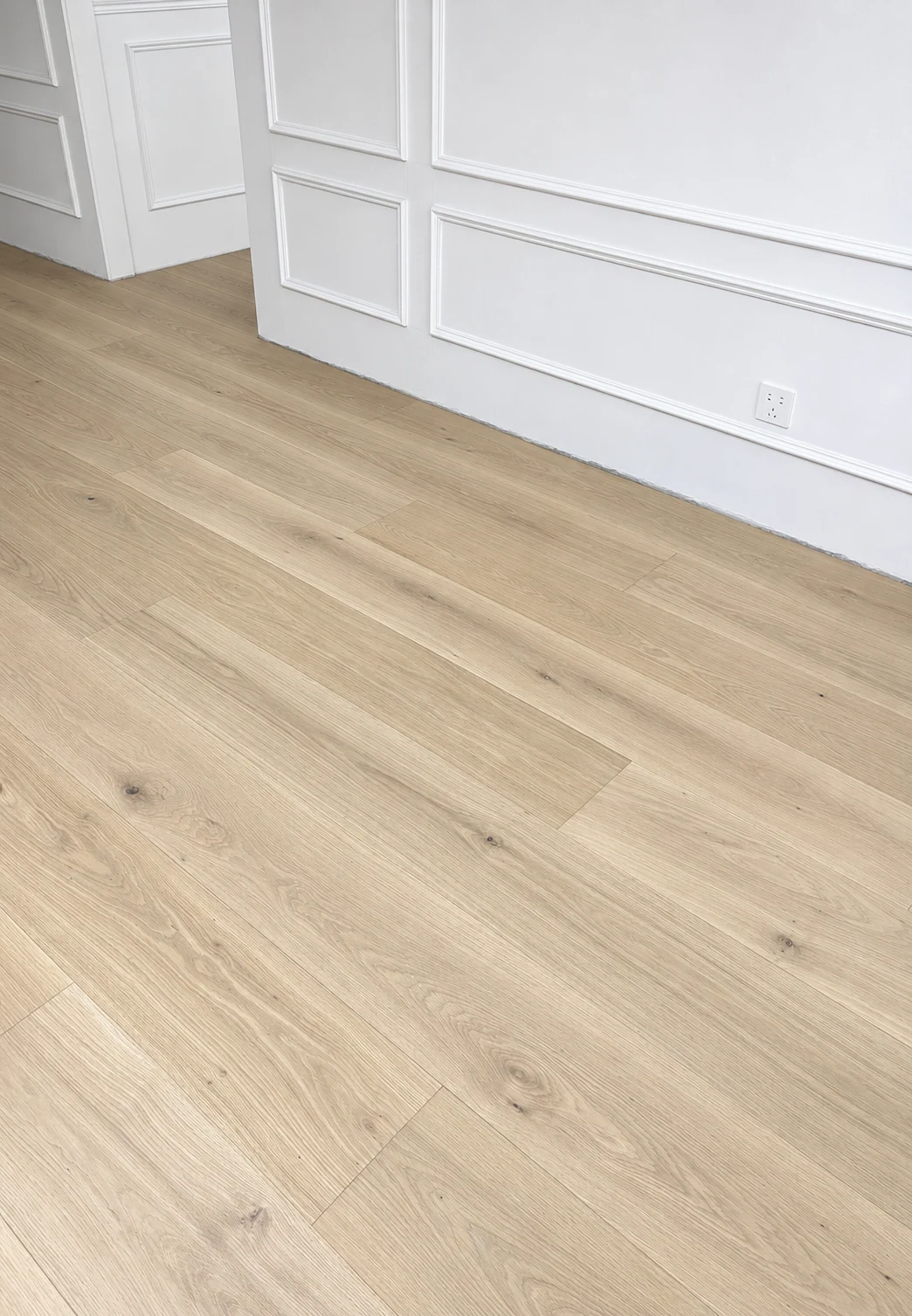
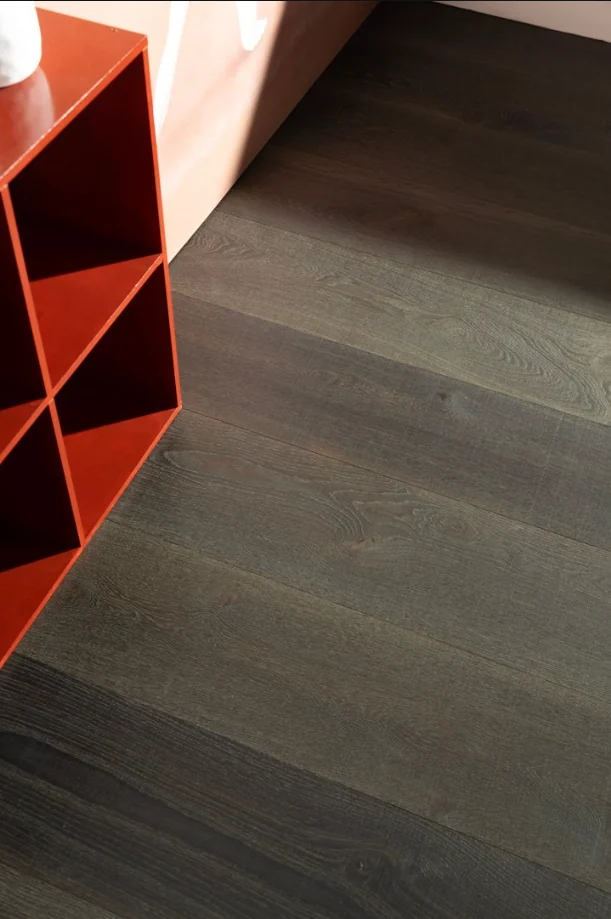
For China wood flooring projects, compare renderings, furniture finishes and wall colour samples with physical flooring. HUAGE discusses colour, design and finish through sampling, then connects approval with ordering and arrival trial-laying.
First explain which effect the reference image is intended to convey
Before sampling, identify the part of an interior image that matters: warmer or greyer wood, knots and grain variation, or brushed and hand-scraped surfaces. Lighting, furniture and walls also affect perception. Describing desired features separately makes sample selection clearer than sending one image alone.
HUAGE designs do not share one finish. Some straight boards list hand-scraping, cross-sanding or brushing; other long boards and parquet have their own coatings. Record colour and process separately, confirming which applies to the chosen design. Similar colour does not mean identical finishes or care requirements.
See the combined range beyond one sample
Single samples reveal local grain; multiple boards better show tonal variation and knot distribution. For natural timber surfaces, agree the acceptable range rather than focus on one board's most attractive area. Catalogue ABC and ABCD groups concern face selection. Actual appearance needs samples and agreement; letters alone are not a universal quality ranking.
Herringbone, chevron and square parquet need assessment as laid combinations. Grain directions and module boundaries shape the whole composition. Arrange samples in the intended pattern, comparing principal views and furniture before choosing transitions and direction. Small samples resolve local questions but cannot replace broad layout observation.
An approved retained sample provides a consistent reference for later checks
For order checks, assign approved samples identifiers with the product name, construction, specifications, colour direction, finish and approval date. For custom colours or patterns, also retain the corresponding artwork version. Identify signatories, sample storage arrangements and application areas so purchasing, site work and later maintenance can recognise the same reference.
Sealing an approved sample does not eliminate inherent grain variation. Define the permitted range and arrival comparison method. For coordinated wood colours, compare floor, stair, wall and trim samples together, but confirm each construction and finish separately. Similar colours do not prove that the same build-up is suitable.
Site trial-laying provides another check before installation
Original HUAGE guidance requires opening boxes, laying out as many boards as possible, adjusting colour and transitions and obtaining user approval before installation. This brings sampling decisions into the actual room, where light, direction and area are known. Check light/dark distribution against the agreed range and discuss noticeably different areas before fixing.
Compare sample, order and trial-layout records. If actual appearance differs from approval, identify the product, batch and finish before deciding treatment, rather than replacing site judgement with photographs. HUAGE's sampling discussions follow specific proposals; sampling costs, achievable scope, approval methods and timing need further project confirmation.
For China projects, state sample numbers, rooms and approvers before ordering, then trial-lay in the intended pattern after arrival. Agree sampling conditions and permitted appearance ranges so selection and site work share one basis.